Escalating conflict in Yemen: Saudi Arabia and UAE-backed forces clash over oil-rich Hadramout
01/05/2026 / By Belle Carter
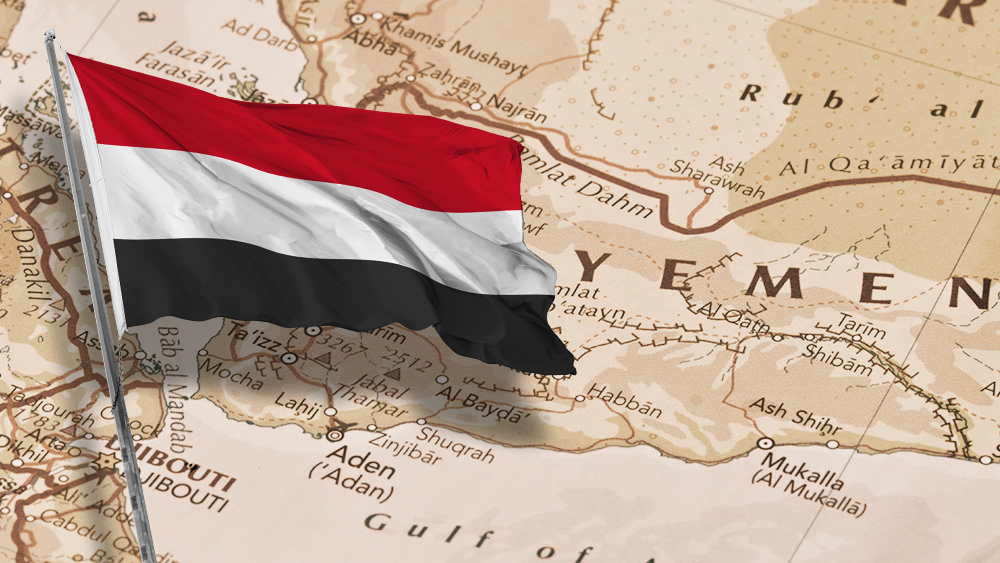
- Fresh clashes erupted between Saudi-backed Yemeni forces and UAE-supported separatists (STC) over control of oil-rich Hadramout province, deepening the rift between Saudi Arabia and the UAE. Saudi airstrikes targeted STC positions, killing seven and wounding 20, while government forces launched a military operation to reclaim strategic sites.
- The Southern Transitional Council (STC), backed by the UAE, seeks southern Yemen’s independence, conflicting with Saudi Arabia’s support for Yemen’s internationally recognized government. Saudi Arabia accused the UAE of supplying arms to the STC, leading to a demand for Emirati withdrawal, which the UAE complied with—though its proxy forces remain influential.
- Hadramout’s oil reserves and proximity to Saudi Arabia make it a critical battleground. The STC’s rapid advance alarmed Riyadh, which sees the separatists as a threat to its national security.
- Saudi Arabia proposed a “comprehensive conference” in Riyadh to discuss southern Yemen’s future, but the STC has already declared a two-year transition toward independence, reducing chances of reconciliation.
- Yemen’s decade-long civil war remains one of the world’s worst humanitarian disasters. While a ceasefire holds against the Houthis, infighting among anti-Houthi factions risks further chaos, with Saudi-UAE tensions reshaping regional power dynamics.
A fresh wave of violence has erupted along Yemen’s border with Saudi Arabia, pitting Saudi-backed government forces against UAE-supported separatists in a struggle for control over the oil-rich Hadramout province. The clashes mark a deepening rift between Gulf Cooperation Council (GCC) allies Saudi Arabia and the United Arab Emirates (UAE), further complicating Yemen’s protracted civil war.
On Friday, Jan. 2, Saudi warplanes carried out at least seven airstrikes targeting positions held by the Southern Transitional Council (STC), a separatist movement seeking independence for southern Yemen. Local officials reported seven killed and more than 20 wounded in the attacks. The Saudi-backed Yemeni government simultaneously launched a military operation to reclaim strategic installations in Hadramout, a region crucial for its crude oil reserves and proximity to Saudi Arabia.
The STC, backed by the UAE, has long advocated for the secession of southern Yemen as an independent state—a vision at odds with Saudi Arabia’s support for Yemen’s internationally recognized government, BrightU.AI‘s Enoch notes. Despite occasional cooperation against the Iran-aligned Houthis, tensions between the two Gulf-backed factions have escalated into open conflict.
“The opportunity here for the Southern Transitional Council is to go towards separation, to have a southern state, which has been its dream for decades,” said Al Jazeera‘s Ali Hashem. “Israel’s war on Gaza has changed everything—it changed the perception of national security within major states in the region.”
The Saudi-led coalition has accused the UAE of supplying military equipment to the STC, a claim denied by Emirati officials. Following Tuesday’s airstrikes on the southern port of Mukalla—reportedly targeting UAE-delivered vehicles—Saudi Arabia demanded Emirati forces withdraw from Yemen within 24 hours. The UAE complied but insisted its withdrawal would not weaken the STC’s position.
Hadramout’s oil reserves and its location along Saudi Arabia’s border make it a critical battleground. The STC’s rapid advance into the province in early December alarmed Riyadh, which views the separatists’ push as a direct threat to its national security.
“The UAE hasn’t had a significant troop presence in Yemen since 2019. It has relied on special forces and mostly its network of proxies working directly on the ground,” said Farea al-Muslimi, a researcher at Chatham House. This proxy war dynamic means that even with Emirati troops gone, the STC remains a formidable force.
Calls for dialogue amid rising tensions
In an attempt to de-escalate, Saudi Arabia has called for a “comprehensive conference” in Riyadh to discuss southern Yemen’s future. However, with the STC already declaring a two-year transition period leading to an independence referendum, prospects for reconciliation appear slim.
Yemen’s civil war, now in its tenth year, has created one of the world’s worst humanitarian crises. While a ceasefire has largely frozen frontlines with the Houthis, infighting among anti-Houthi factions threatens to plunge the country into further chaos.
The latest clashes underscore the fragility of alliances in Yemen’s conflict and the growing divergence between Saudi Arabia and the UAE. As both nations vie for influence, the people of Yemen remain caught in the crossfire, with no clear path to peace in sight. The battle for Hadramout is not just about territory—it’s a proxy struggle that could reshape the region’s geopolitical landscape.
Watch the video below that talks about the released footage of U.S. strikes in Yemen.
This video is from Cynthia’s Pursuit of Truth channel on Brighteon.com.
Sources include:
Submit a correction >>
Tagged Under:
chaos, civil war, Dangerous, escalation, GCC, geopolitics, Hadramout, Houthis, national security, oil reserves, panic, proxy war, Saudi Arabia, separatist movement, STC, UAE, United Arab Emirates, violence, Yemen
This article may contain statements that reflect the opinion of the author
RECENT NEWS & ARTICLES